


Bandits (4 of 4)
«(…) robbers are not wholly divested of some notions of rough honour; and however cruel, brutal and rapacious, many of them look upon themselves still as a sort of semi-soldiers»
Terence Hughes (Revelations of Spain in 1845, 1845)
Terence Hughes connects the concept of honour to the image of the bandit, suggesting that the bandit sees himself as a military-like figure who must defend the poor and the oppressed. Hughes posits that the country’s unique concept of private property partly explains the situation:
In a country where the rights of property are imperfectly developed, robbers are not wholly divested of some notions of rough honour; and however cruel, brutal and rapacious, many of them look upon themselves still as a sort of semi-soldiers. Should a fitting occasion arise, they are prepared to take the field under an appropriate leader (Vol. I, 381).
This romantic fixation with the notion of being robbed by bandits and later recounting a tale of heroic deeds prompted numerous anecdotes. In George Cayley’s case, fearing that he was going to be attacked by robbers near Ronda, he and his companions decided to disguise themselves as muleteers. They did such a good job, that when they arrive in Gibraltar, the locals believe them to be the criminals: “Look there! Here is doubtless a pair of those picturesque Ronda smugglers Mr. Ford speaks of” (164).
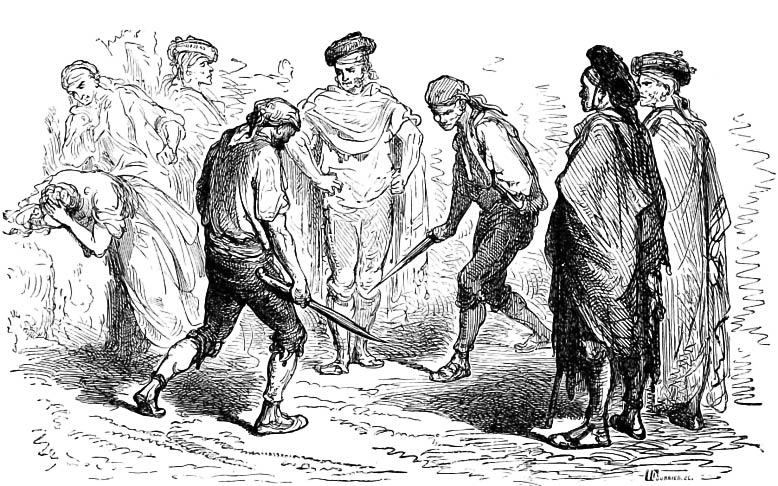
DUEL WITH THE RAZOR. L’Espagne, by Baron Charles d’Avillier. Illustration by Gustave Doré.


