


Andalusia (2 of 3)
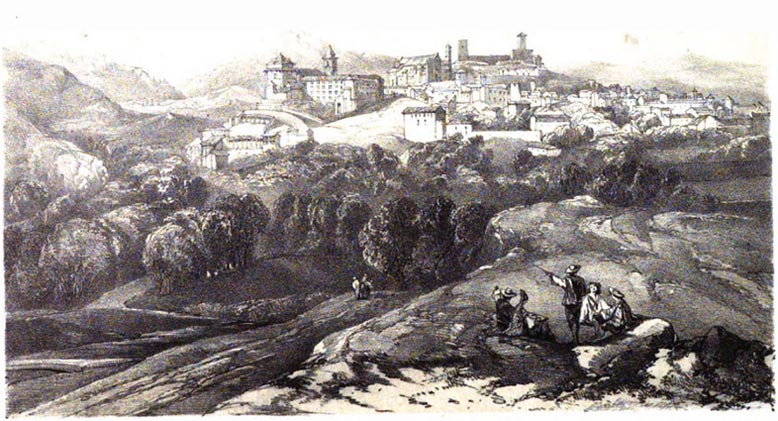
ANTEQUERA. Castile and Andalucia, by Lady Louisa Tenison (1853). Illustrations by Mr. John F. Lewis, based on originals by Lady Louisa Tenison and Mr. Egron Lundgren.
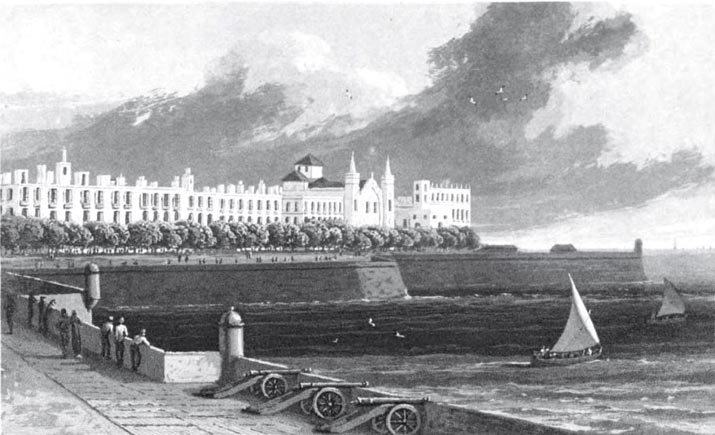
CADIZ. Descriptive travels in the southern and eastern parts of Spain and the Balearic Isles, by John Carr (1811).
Granada also figures prominently in the accounts of these authors and across all the periods studied. Louisa Tenison arrived in the former capital of the Nasrid dynasty in 1852, describing it as the most beautiful of cities. According to her, witnessing Granada for the first time is one of life’s greatest pleasures, surpassed only by the joy of visiting it again:
The same well-known road was traversed the next day on our way to Granada, and the snowy summits of the Sierra Nevada warned us once more of our proximity to this most enchanting of cities. Once more our footsteps lingered amid the fairy halls of its Moorish palace; and well did I feel the truth of Dumas’ remark, that although one of the greatest pleasures in life may be the first view of Granada, there is one greater still — that of visiting it a second time (287).
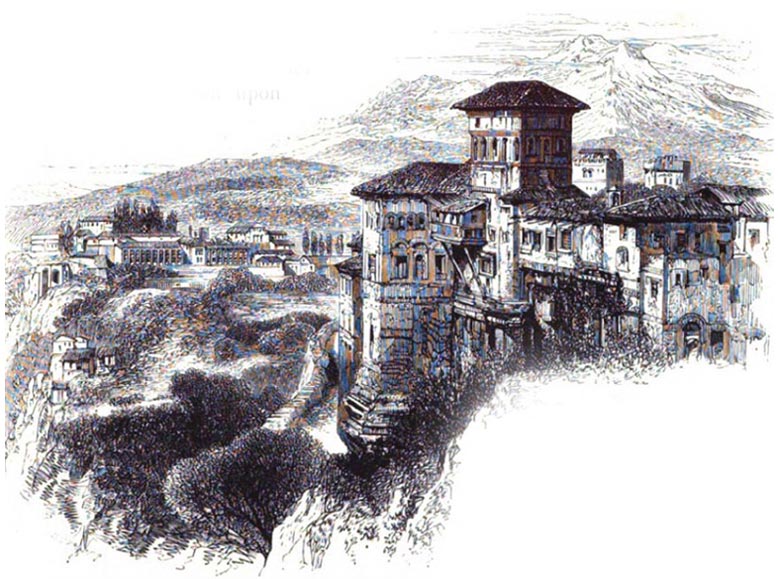
EXTERIOR WALL OF THE ALHAMBRA (THE GENERALIFE IN THE BACKGROUND). Spanish pictures drawn with pen and pencil, by Rev. Samuel Manning (1870). Illustrations by Gustave Doré and other artists.
Susan Hale was also enchanted by the city and confesses that all her previous impressions of Spain are dwarfed by its charm (214). The visit to the Alhambra not only confirms her expectations of the palace but surpasses everything she had imagined about it (237). For Ellen Hope-Edwardes, Granada is the crown jewel of Spain (231), and the author claims to have visited the Alhambra palace almost every day since her arrival (218). In contrast, other travellers, such as Marguerite Purvis, are taken by surprise on encountering a pile of ruins instead of the dreamy oriental palace they expected. Purvis was particularly shocked to learn that some of the towers had been sold to private individuals for summer residences (167). Contradictory feelings are also present in Allison Peers’ 1929 account. Travellers define the Alhambra as a jewel of incomparable beauty, a place of incredible splendour and opulence. However, this contrasts with the relative modernisation of the city and the poor state of conservation of certain landmarks, such as the Arab baths on the Carrera del Darro, where one finds people living, or the historic Casa del Chapiz, which functions as a bakery (94).
«(…) One of the greatest pleasures in life may be the first view of Granada»
Louisa Tenison (Castile and Andalucia, 1853)
The first sight of Granada also makes a strong impression on George Dennis. Overwhelmed by his emotions, the author cannot believe his eyes:
I could scarcely believe my senses. Did I indeed behold the far-famed city of the plain — Granada, the city of the chivalrous Arabs, so renowned in romantic song and story? Was this the abode of their princes, the birth-place of their heroes, the last remaining city of their once splendid empire of the West? Was this indeed the land of my affections, the spot of all others that from my childhood I had most burned to behold? I could hardly conceive it to be real: the whole scene seemed to dance before my eyes in visionary splendor (372-373).


