


Guides (2 of 2)
«They remember little but dates; in what year, for example, such or such an archbishop died, or such a king was bom, which one might discover without travelling so far as Toledo»
Thomas Roscoe (The tourist in Spain: Biscay and the Castiles, 1837)
Many foreign visitors criticise guides for repeatedly focusing on facts and dates that they consider irrelevant. After visiting Toledo, Roscoe writes:
Toledo, every traveller will confess, is a dull place, for even the guides, those never-failing resources elsewhere, are here infested with taciturnity, and drawl out their legends and antiquities as if they believed not the one and despised the others. They remember little but dates; in what year, for example, such or such an archbishop died, or such a king was bom, which one might discover without travelling so far as Toledo (The tourist in Spain: Biscay and The Castiles, p. 284).
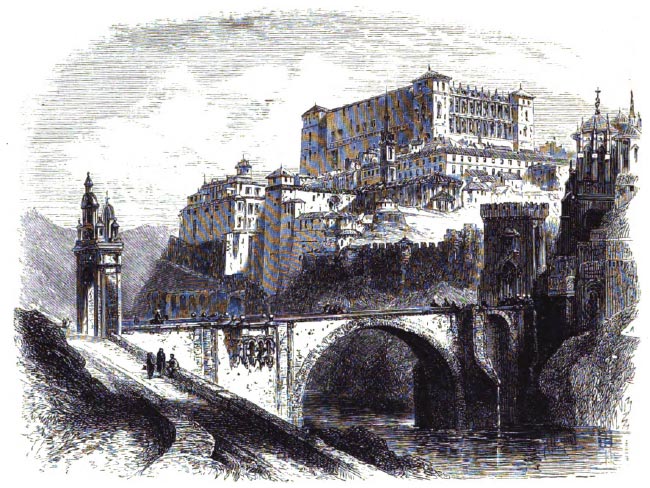
TOLEDO. Spanish pictures drawn with pen and pencil, by Samuel Manning (1870).
According to Ellen Hope-Edwardes, the guides in Toledo almost accosted them in Plaza Zocodover, eager to show them the best spots in the city. They eventually hired a renowned local guide, Mariano, who claimed to speak English and French but conducted the entire tour in Spanish (265). The author warns her readers that many of these guides expect little “a little something” and reminds them to have a tip ready. George Cayley also complains about the number of guides who constantly try to entice him with their services:
While we were dressing, our door was beaten by not less than a dozen applicants, who expressed, through the keyhole, in various degrees of approximation to French and English, a desire to guide us about Granada. Everybody here is a guide (…) He proved to be a son of the celebrated Bensaken; and while we were at dinner he returned to the charge, bringing two volumes of testimonies to his father’s qualities as a guide. We told him that it was against our principles ever to be led about (225).
Some authors have positive experiences with local guides and appreciate everything these guides can do for them. However, good guides are in the minority. Samuel Widdrington, for example, acknowledges that he was initially wary of his guide in Oviedo. However, the guide surprises him by taking him to an excellent guesthouse, much better than others listed in guidebooks written by foreigners.


