


Aristocracy (2 of 2)
«The Spanish Nobility have almost entirely lost ground in modern Spain. Although retaining the forms of a monarchy, this country is perhaps the most perfect realisation of a republic in Europe»
Terence Hughes (Revelations of Spain in 1845, 1845)
Towards the late 19th century, Ellen Hope-Edwardes criticises the mismanagement of the aristocratic class, contraband and monopolies. Hope-Edwardes focuses on two affluent families in Malaga, the Larios and the Heredias, illustrating how they accumulated their great fortune through state-granted sugar and iron monopolies (Vol. I, 154). Her perspective seems influenced by Calvinist ethics, viewing prosperity as indicative of spiritual purity and obedience to divine mandates (156). In contrast to this regulated economy, based on non-liberal trade, the author highlights the dynamic progress and growth of her home country, England.
Terence Hughes also observes the declining influence of the noble class in the country. The Irish writer contends that Spain is the most republican monarchy in Europe and claims that meritocracy is increasingly outweighing birth right:
The Spanish Nobility have almost entirely lost ground in modern Spain. Although retaining the forms of a monarchy, this country is perhaps the most perfect realisation of a republic in Europe. High birth is no longer respecter, unless it hace personal merits, and the sole recognised aristocracy is of genius. Even the Upper Chamber is subject by rotation to election; and the principle of royal nomination is but slightly in force (Vol. II, 67).
However, amidst this criticism, some writers do express positive opinions about the aristocracy. Upon visiting the Trinidad orphanage in Seville and noticing the limited State-granted resources, Mary Elizabeth Herbert commends noble families for their contributions, which support the centre in providing services to the poor:
From thence our travellers went on to the orphanage managed by the‘ Trinitarian sisters.’ The house was built in the last century, by a charitable lady, who richly endowed it, and placed 200 children there; now, the government, without a shadow of right, has taken the whole of the funds of the institution, and allows them barely enough to purchase bread. The superior is in despair, and has scarcely the heart to go on with the work. She has diminished the number of the children, and has been obliged to curtail their food, giving them neither milk nor meat except on great festivals. But for the intervention of the Duc de Montpensier, and other charitable persons, the whole establishment must long since have been given up (163).
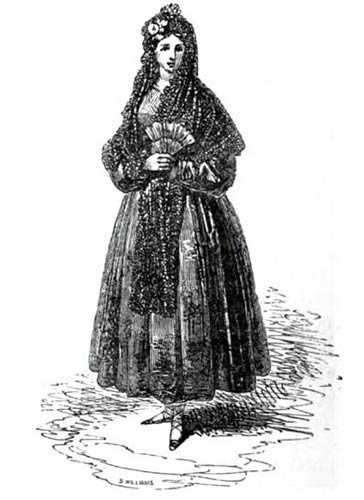
SPANISH WOMAN. Near Home of the Countries of Europe Described, by Favel Lee Mortimer (1849).


