


9.4 Ellas también imprimen (4)
Francisco Navarrete y Ribera (ca. 1592-post. 1650)
Flor de sainetes / compuesto por Francisco Nauarrete y Ribera ; a don Francisco Varrionueuo de Peralta, marques de Cusano ... En Madrid : por Catalina del Barrio y Angulo, 1640. BNE.
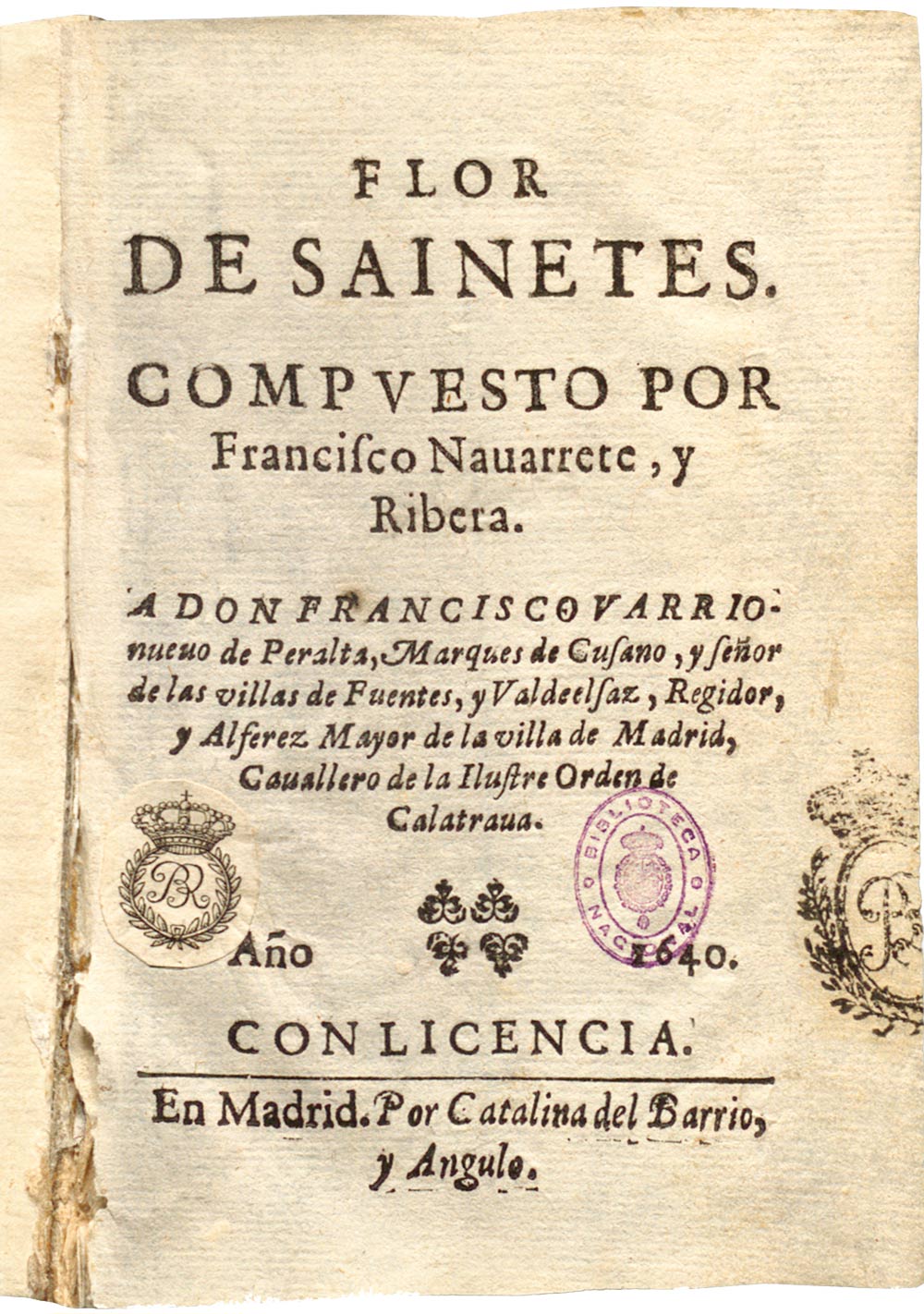
Catalina del Barrio enviudó en tres ocasiones, y mientras estuvo viuda no dudó en ponerse al frente del taller de imprenta familiar, durante un total de más de veinte años. Se cree que no sabía escribir, pero esto no fue obstáculo para ocuparse del negocio. Siguiendo el modelo de su segundo marido, el impresor Juan González, Catalina se especializó en la impresión de relaciones de sucesos y alegaciones, aunque también se imprimían en su taller otros tipos de textos variados.
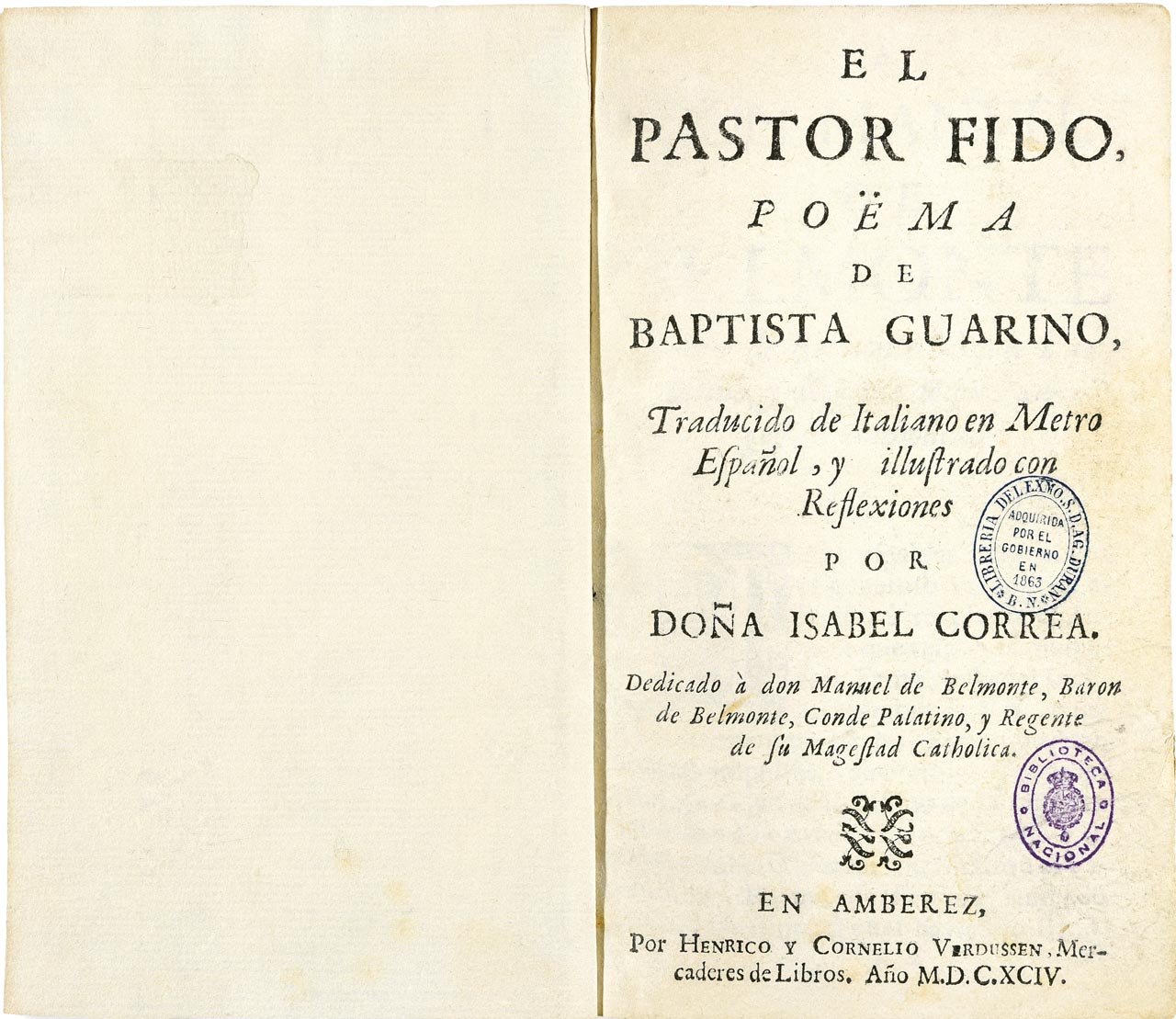
El pastor Fido poëma de Baptista Guarino / traducido de italiano en metro español y illustrado con reflexiones por doña Isabel Correa ; dedicado a don Manuel de Belmonte ... En Amberez : por Henrico y Cornelio Verdussen, mercaderes de libros, 1694. BNE.
Escritora judía nacida en Portugal, Isabel Correa residió en Holanda gran parte de su vida, donde convivió con otros judíos sefarditas. Apenas se conserva obra de esta autora, con la excepción de esta versión de 1694 de El pastor Fido (Venecia, 1590), ejemplo de literatura pastoril que sigue los cánones petrarquistas: «Lo traduje metrificado en español, no cediendo en aseo, y pompa a los dos sus predecesores: antes permítame la modestia al decirlo, los supero en parte [...] por haberlo ilustrado con algunas reflexiones». La autora no solo traduce, sino que añade versos de tema amoroso de su propia creación señalándolos claramente para reclamar su autoría. En ellos reformula tópicos de herencia petrarquista y reivindica la relevancia de la escritura femenina al insertarse en una larga tradición de mujeres autoras desde la Antigüedad hasta su contemporánea Guadalupe Lancastro, duquesa de Aveiro (1630-1715).
9.4 Women also print (4)
Francisco Navarrete y Ribera (ca. 1592-post. 1650)
Flor de sainetes [Bloom of Sainetes] / composed by Francisco Navarrete y Ribera; for don Francisco Varrionuevo de Peralta, Marquis of Cusano… In Madrid: by Catalina del Barrio y Angulo, 1640. BNE.
Catalina del Barrio was widowed in three occasions. While being a widow, she did not hesitate to manage the family printing house for more than twenty years in total. It is believed that she did not know how to write, but this was not an obstacle for her to be in charge of the business. Following the model of her second husband, the printer Juan González, Catalina became a specialist in the printing of news pamphlets and documents containing allegations, although her printing house also produced many other types of texts.
El pastor Fido poëma de Baptista Guarino [The Shepherd Fido, Poem by Baptista Guarino] / translated from Italian to Spanish metrics and illustrated with some reflections by Doña Isabel Correa; dedicated to Don Manuel de Belmonte…. In Antwerp: by Henrico and Cornelio Verdussen, merchants of books, 1694. BNE.
Isabel Correa was a Jewish writer born in Portugal. She resided in the Netherlands for a significant part of her life, where she lived with other Sephardic Jews. There are not many surviving pieces of her work apart from this 1694 version of El pastor Fido (Venice, 1590), an example of literatura pastoril (‘pastoral literature’) which follows the Petrarchian canons: Lo traduje metrificado en español, no cediendo en aseo, y pompa a los dos sus predecesores: antes permítame la modestia al decirlo, los supero en parte [...] por haberlo ilustrado con algunas reflexiones [I translated it to the Spanish metrics, not displaying less care and magnificence than its predecessors, to which, let me say in all modesty, it is superior since I added illustrations and some reflections]. The author not only translates the text, but also adds some love verses written by herself, clearly highlighting them to claim her authorship. In these verses, she reformulates some topics inherited from the Petrarchian tradition and defends the relevance of female writing by including herself in a long tradition of female authors from Antiquity to her contemporary Guadalupe Lancastro, duchess of Aveiro (1630 – 1715).


