

Siglos V a X Inicios y fundamentos de la actividad traductora en la Alta Edad Media
2
Griego y latín, lenguas de ciencia y cultura
Las primeras noticias de la traducción en Europa se remontan al período altomedieval, a los siglos V y VI d. C., que contemplaron la transición del mundo antiguo a un tiempo diferente. La traducción se ejerce, como había sucedido ya en la Antigüedad romana, por razones prácticas, vinculada principalmente a la difusión y la enseñanza del conocimiento y a la formación religiosa y moral ejercida sobre todo en monasterios.
Esta temprana actividad de traducción se desarrolló en las dos grandes lenguas de la ciencia y la cultura del momento, el griego y el latín.
Como testimonios extraordinarios de aquella labor, conservamos, a pesar del paso inexorable del tiempo, algunas traducciones de escritos científicos producidas presumiblemente en el siglo VI d. C. en un entorno académico de Rávena. Buen ejemplo de ello son las traducciones latinas de la obra del médico griego Oribasio de Pérgamo (siglo IV d. C.), de importante difusión durante la Alta Edad Media europea, o las que Martín de Dume (o de Braga) y Pascasio realizaron en ese mismo siglo de diversos escritos griegos.
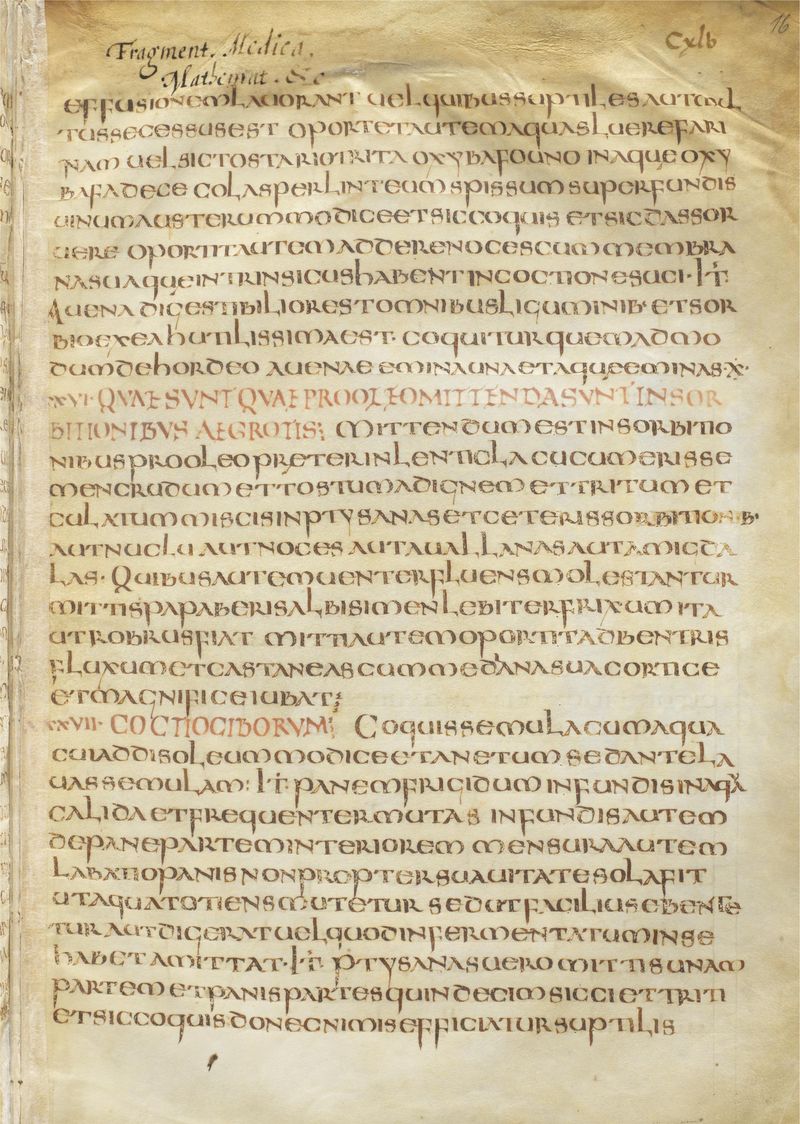
Synopsis medica, Bern, Burgerbibliothek, cod. F 219 III, f. 16r – Oribasius. Manuscrito en uncial escrito probablemente en España y llegado a Chartres quizás a través de Italia, [dominio público] vía Wikimedia Commons.
 Hipócrates
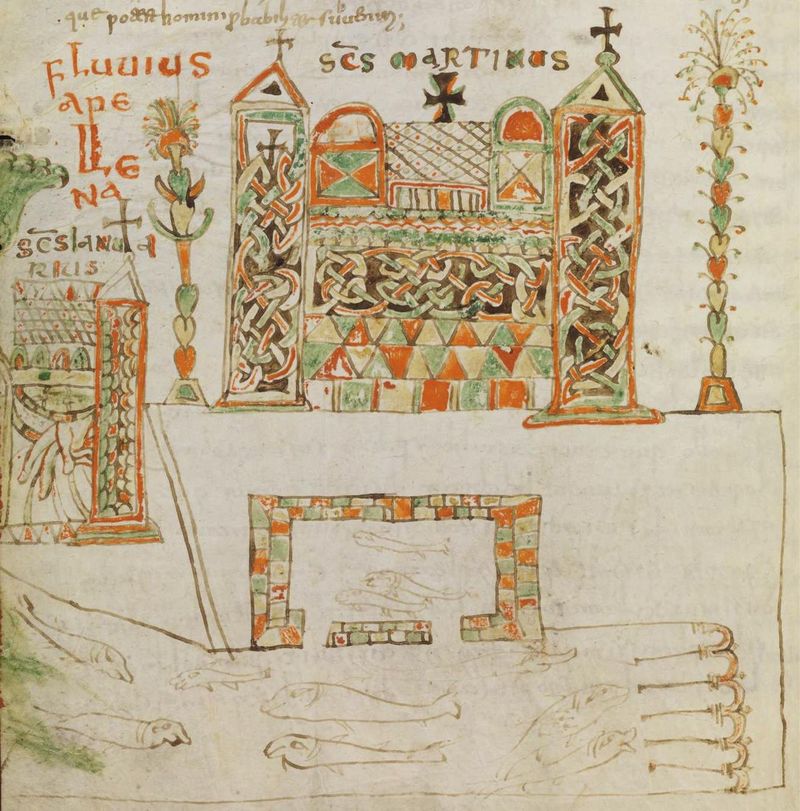
Vivarium, Manuscrito de Bamberg. Staatsbibliothek, Patr. 61, fol. 29v, [dominio público] vía Wikimedia Commons.
Estas traducciones, como otros muchos textos, serían cuidadosamente guardadas para el futuro en aquella red europea de conservadores librarios que constituyeron monasterios y abadías extendidos por todo el territorio europeo continental e insular. En ese contexto hemos de entender la recomendación del abad Casiodoro (siglo VI) a los monjes de Vivarium de leer a Hipócrates y Galeno traducidos al latín: post haec legite Hippocratem atque Galienum Latina lingua conversos (Inst. 1.31.2).
Las lenguas orientales: el siriaco y el árabe.
Pero los siglos de la Alta Edad Media contemplaron también, en distintas ciudades de Oriente Próximo, una intensa y productiva labor traductora que tendría una enorme trascendencia para el progreso de Europa en el período bajomedieval. Destacaron en esta tarea distintos grupos de cristianos nestorianos, que, por motivos de índole política y religiosa, se fueron desplazando progresivamente desde territorio griego a zonas orientales. En este caso se tradujeron desde el griego al siríaco y al árabe importantes escritos de carácter científico y filosófico. Exponente principal de esta actividad fue el círculo de traductores de Bagdad, vinculado a la figura de Iohannitius o Ḥunayn ibn Isḥāq.
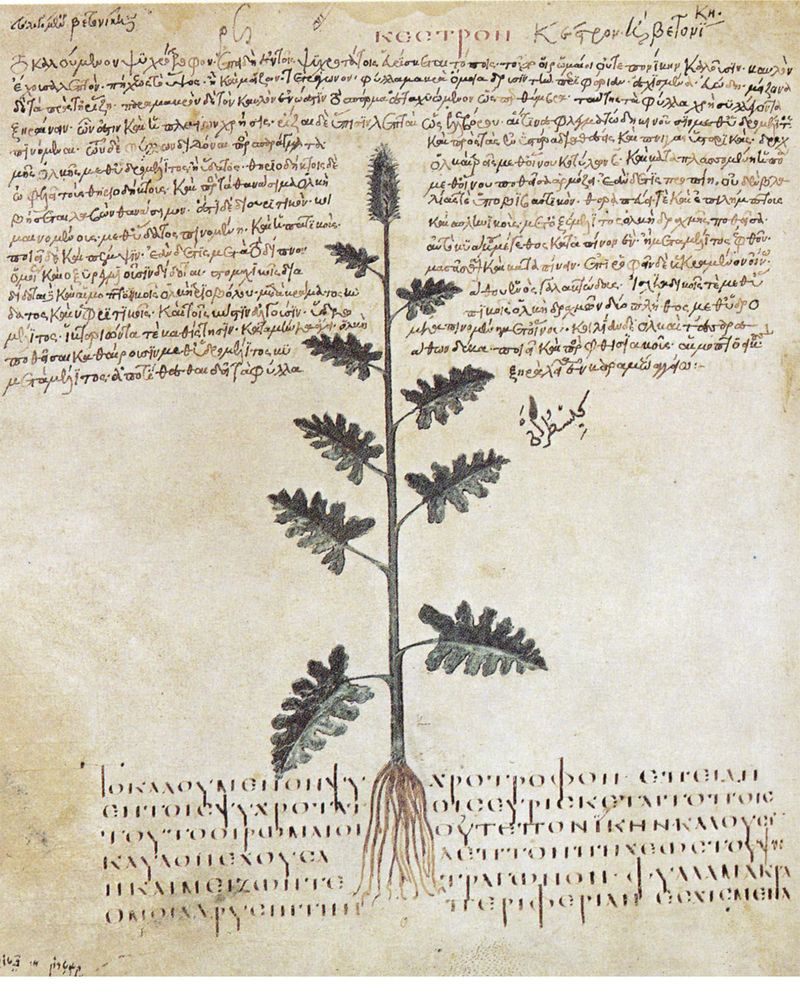
Dioscórides, Materia medica. Dioscórides de Viena o de Anicia Juliana, hija del emperador Olibrio, ms. Vindobonensis Med. Gr. 1, ONB, c. 512 d. C., 194v, con anotación en árabe, [dominio público] vía Wikimedia Commons.
Hispania árabe
Por supuesto, el entramado lingüístico y cultural que conformó la península ibérica en este período motivó también la aparición de traducciones del griego o del latín al árabe, como la famosa versión de la obra de botánica medicinal de Dioscórides, que no conservamos, encargada en el siglo X en Córdoba por Abderramán III. Y tampoco faltaron las tempranas versiones del árabe al latín de este siglo, como algunas de escritos de matemáticas o astrología de las que hay noticias y testimonios en tierras catalanas.
5th to 10th centuries Beginnings and foundations of translation activity in the Early Middle Ages
2
Greek and Latin, languages of science and culture
The first signs of translation in Europe date back to the early medieval period, to the 5th and 6th centuries AD, which saw the transition from the ancient world to a new era. As had happened during Roman Antiquity, translation was carried out for practical reasons, mainly relating to the dissemination of knowledge and to the religious and moral training provided in monasteries in particular.
This early translation activity involved what were then the two great languages of science and culture: Greek and Latin.
Despite the inexorable passage of time, extraordinary evidence of that work has been preserved in the form of translations of scientific works thought to have been produced in the 6th century AD in the academic milieu of Ravenna. Good examples of this are the Latin translations of the work of the Greek physician Oribasius of Pergamon (4th century AD), which were widely disseminated during the Early Middle Ages in Europe, or those produced during that same century by Martin of Dume (or of Braga) and Paschasius of various Greek exemplary and conciliatory works.
Synopsis medica, Bern, Burgerbibliothek, cod. F 219 III, f. 16r – Oribasius. Uncial manuscript which was probably written in Spain and which reached Chartres, perhaps by means of Italy, [public domain, via Wikimedia Commons].
Vivarium, Bamberg manuscript. Staatsbibliothek, Patr. 61, fol. 29v [public domain, via Wikimedia Commons].
Like many other texts, these translations would be carefully preserved for future reference by the European network of monasteries and abbeys spread throughout European mainland and island territory, which had effectively acted as book archives. It is against this background that we should consider the recommendation of the abbot Cassiodorus (6th century) to the monks of Vivarium that they read Hippocrates and Galen translated into Latin: post haec legite Hippocratem atque Galienum Latina lingua conversos (Inst. 1.31.2).
Middle Eastern languages: Syriac and Arabic.
However, the centuries of the Early Middle Ages also saw intense and productive translation work in various cities of the Middle East, which would be of crucial importance to Europe’s progress in the high/late medieval period. Prominent in this work were various groups of Nestorian Christians, who, for political and religious reasons, were gradually moving from Greek territory to eastern areas. In this case, important scientific and philosophical works were translated from Greek into Syriac and Arabic. Principal exponents of that activity were the Baghdad group of translators, linked to Johannitius, or Ḥunayn ibn Isḥāq.
Dioscorides, De materia medica. Dioscorides of Vienna or of Anicia Juliana, daughter of the Emperor Olybrius, ms. Vindobonensis Med. Gr. 1, ONB, c. 512 d. C., 194v, with annotations in Arabic [public domain, via Wikimedia Commons].
Arab Hispania
Of course, the linguistic and cultural fabric of the Iberian Peninsula during this period also led to the appearance of translations from Greek and Latin into Arabic, such as the famous version of the botanical medicinal work of Dioscorides, which we have not preserved, commissioned in Cordoba in the 10th century by Abd al-Rahman III. There were also early translations from Arabic into Latin in that century, such as certain mathematical and astrological works, evidence of which has been found in Catalan areas.


