

Introducción
1
La traducción, lengua de Europa. Traducción y circulación de ideas en Europa y España: un recorrido histórico trata de dar a conocer la traducción escrita y la oral (interpretación) como medios imprescindibles para la comunicación en infinidad de situaciones y momentos a lo largo de la historia de lo que hoy es España, y también Europa y el mundo, facilitando así la circulación de ideas entre culturas y civilizaciones. La escasez de referencias a todas esas actividades traductoras en la historiografía convencional relega a menudo al silencio a quienes las practicaron y las practican, aunque existen pruebas fehacientes (algunas las destacamos aquí) de su presencia en cierto número de fuentes del pasado, generalmente dispersas y fragmentarias.
Las lenguas de Europa se convirtieron en lenguas de cultura gracias a la traducción. El castellano fue una de las primeras lenguas europeas en alcanzar este estatus, gracias en buena medida a las numerosas traducciones promovidas por Alfonso X de obras jurídicas, históricas, astrológicas, sapienciales y literarias. De ese modo, Calila e Dimna, la traducción al castellano de un texto árabe —que era a su vez una traducción del persa, inspirada en fuentes sánscritas— se convirtió en un clásico de las letras hispánicas. Casi tres siglos más tarde. la traducción de la Biblia hecha por Lutero (1534) prestigiaba el alemán.

Hoy, como ayer, la traducción está presente en situaciones muy diversas: desde la traducción de un libro, un manual de instrucciones o un prospecto farmacéutico hasta la interpretación de conferencias, entrevistas, declaraciones, contactos multilingües en un consultorio médico, en un tribunal o en un conflicto bélico, pasando por los mundos complejos y cambiantes de 16 audiovisual (doblaje, subtitulación con sus distintas modalidades, adaptación de videojuegos etc.) y lo digital (por ejemplo, los sistemas de traducción automática, incluida la neuronal).
Trazamos aquí un viaje en el tiempo, con un comienzo siempre cuestionable y un final que queda abierto, ya que los oficios de la traducción seguirán estando presentes en las vidas de quienes nos sucedan. por más que se atisbe en la llamada inteligencia artificial el prodigio (o la «maldición», para otros) que sustituirá a las complejas sinapsis neuronales de las personas que a lo largo de la historia vienen haciendo esa transferencia entre idiomas y culturas.
Partiendo de la feliz sentencia del traductor y académico Miguel Sáenz: «todo es traducción», esta exposición aspira, con toda su modestia, a superar fronteras y ampliar horizontes, objetivos ambos inherentes a los fines de la traducción y al proyecto de la Unión Europea. Invitamos, por ello, a quien recorra estos paneles a que los «traduzca» a su particular universo, participe con sus comentarios sobre lo expuesto, amplíe información y fuentes en los recursos adicionales y nos diga qué es lo que más le ha inspirado.
¡Buen viaje en el tiempo por el mundo de la traducción!
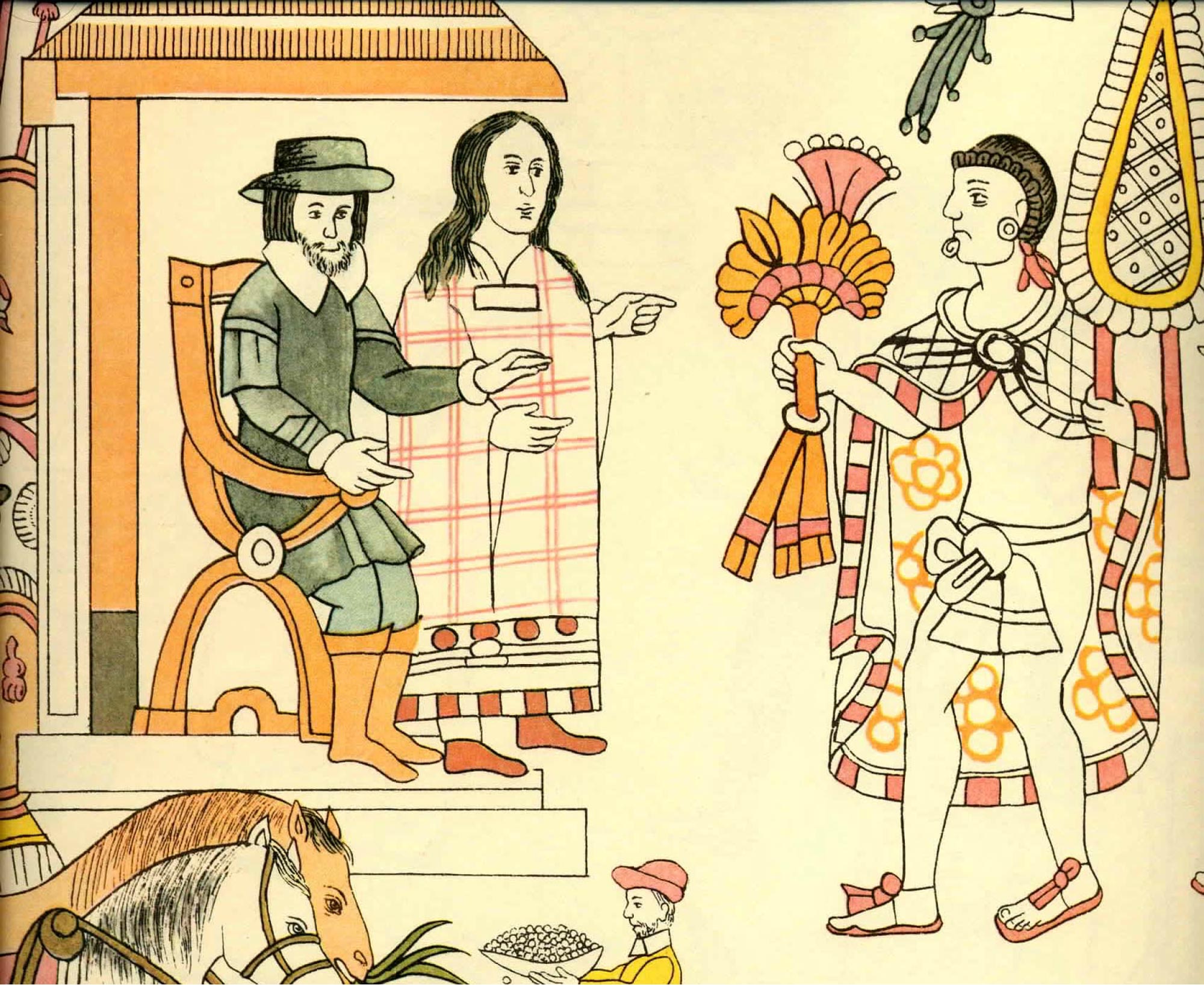
La Malinche, [dominio público] vía Wikimedia Commons.
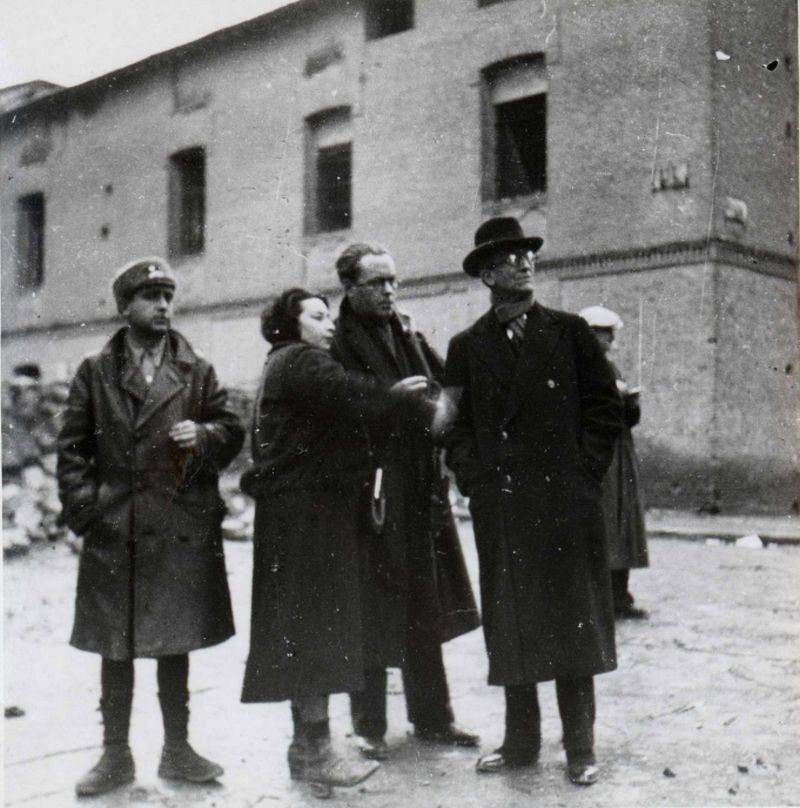
Biblioteca Nacional de España, Guerra Civil, caja 56/13/7.
Más de cuatrocientos años separan a estas dos mujeres: doña Marina (Malinche) interpretando para Hernán Cortés e Ilse Wolff interpretando para visitantes extranjeros en uno de los frentes de la Guerra Civil española. Las imágenes muestran a ambas actuando como intermediarias en situación de conficto y, para facilitar la comprensión del idioma del Otro (uno de ellos es el español), las dos apovan su discurso con un gesto parecido de la mano, simbolando tal vez que la la voz hablada va mas allá de la mera oralidad. Imágenes de dominio público, vía Wikimedia Commons.
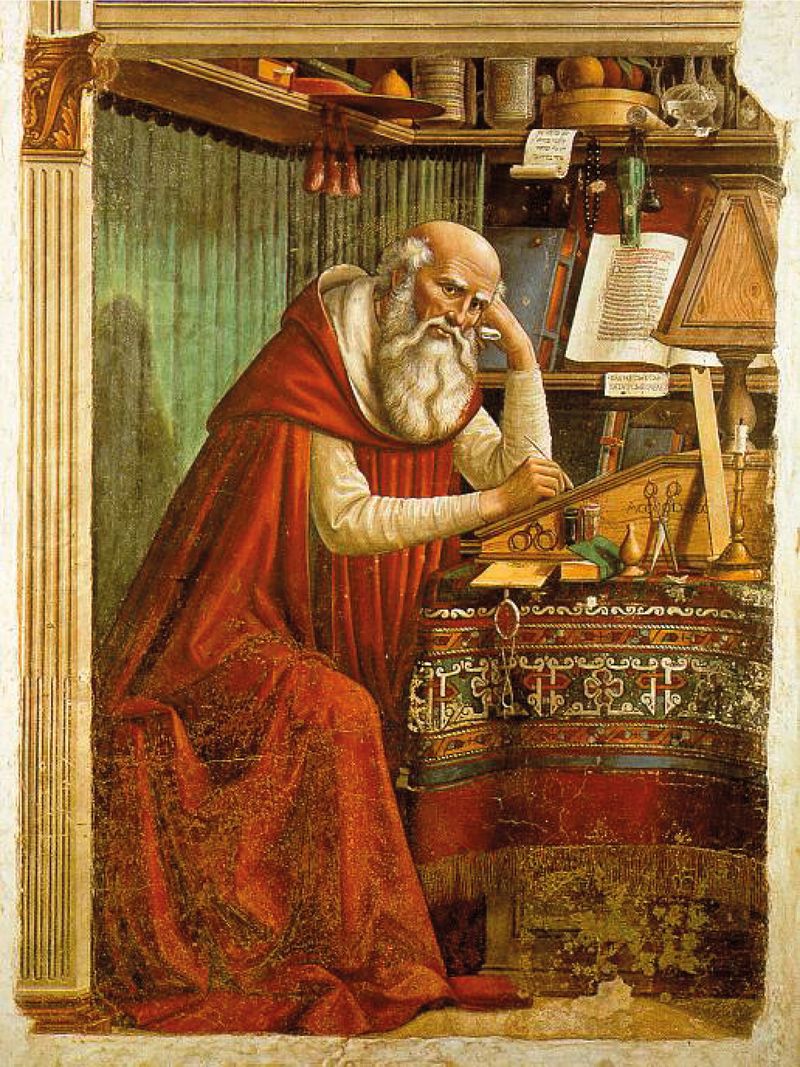
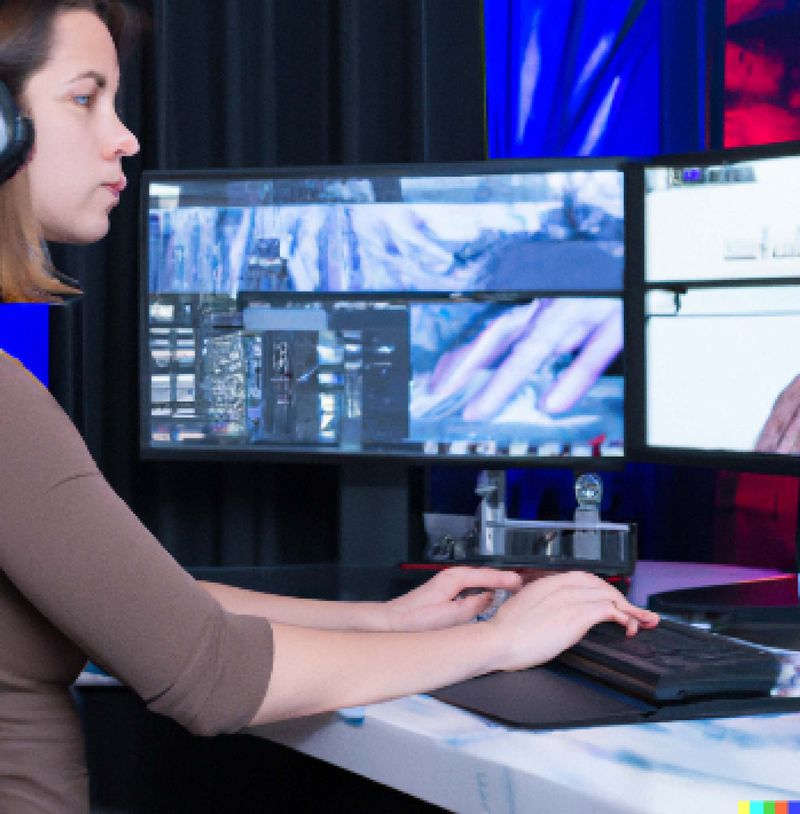
El pasado y... ¿el futuro? San Jerónimo en su estudio (cuadro de Domenico Ghirlandaio, 1480) y una traductora ante su ordenador en un entorno futurista (imagen creada con DALL-E2): la mente humana sigue aún en el centro del proceso de traducción.
Introduction
1
Translation, the language of Europe. Translation and the circulation of ideas in Europe and Spain: a journey through history seeks to show how translation, both written and spoken (interpreting), has been a crucial means for communication in countless situations and moments throughout the history of Spain and Europe, thus enabling ideas to circulate between cultures and civilisations. Given the scant references to all of these translation activities in the conventional history books, those who practised them, and who still practise them, have often remained anonymous, but there is reliable evidence (some which we will highlight here) of their presence from a number of past sources, though it is generally scattered and fragmented.
Thanks to translation, the languages of Europe became languages of culture. Castilian or Spanish was one of the first European languages to achieve that status, largely as a result of the many translations of legal, historical, astrological, philosophical and literary works promoted by King Alfonso X the Wise in the 13th century. As an example, Calila e Dimna, the Castilian translation of an Arabic text – which in turn was a translation from Persian, based on Sanskrit sources – became a classic of Spanish literature.
Today, just as in the past, translation is present in a vast array of situations, from translation of a book, of an instruction manual or a medical information pamphlet, to interpreting at conferences, interviews, speeches, multilingual medical consultations, in law courts or in conflict situations, as well as the complex and ever-changing worlds of the audiovisual (dubbing, subtitling in its various forms, adaptation of video games, etc.) and the digital (such as automatic translation systems, including neural systems).
Here we are taking a journey through time, from a starting point that remains unclear to a destination that is still uncertain, given that translation professions will continue to be present in the lives of those who come after us, however much some might see so-called artificial intelligence as the miracle (or, for others, the ‘curse’) that will replace the complex neural synapses of those who, throughout history, have been enabling this transfer between languages and cultures.
Inspired by the great phrase of the translator and member of the Royal Spanish Academy Miguel Sáenz – ‘everything is translation’ – this exhibition’s modest aspiration is to overcome borders and broaden horizons, both of which are inherent objectives of translation and of the European Union project itself. We therefore invite those of you who are perusing these panels to ‘translate’ them into your own particular universe, to contribute with your comments on what you have seen, to expand on the information and sources with additional resources and tell us what has most inspired you.
Happy time-travels through the world of translation!
La Malinche, public domain, via Wikimedia Commons.
Biblioteca Nacional de España, Guerra Civil, caja 56/13/7.
These two women are separated by more than 400 years: doña Marina (Malinche) interpreting for Hernán Cortés and Ilse Wolff interpreting for foreign visitors on one of the fronts in the Spanish Civil War. The images show each of them acting as intermediaries in conflict situations and, to facilitate understanding of the other person’s language (one of which is Spanish in each case), both use a similar hand gesture to support what they are saying, perhaps illustrating how spoken language goes beyond the merely oral. Images in the public domain, via Wikimedia Commons.
The past and... the future? Saint Jerome in his study (painting by Domenico Ghirlandaio, 1480) and a translator at her computer in a futuristic setting (image created with DALL-E2): the human mind is still at the heart of the translation process.


