

Siglos XV a XVI Traducción y libertad de pensamiento: las versiones de la Biblia
8
La difusión por Europa del humanismo trajo consigo el interés por la traducción de la Biblia para modernizar y mejorar el texto de acuerdo con nuevos criterios. Esta actividad no estuvo exenta de dificultades vinculadas a la censura inquisitorial conforme avanzó el siglo XVI, y particularmente en España. Erasmo de Rotterdam tradujo al latín el Nuevo Testamento (1516) para actualizar el texto de la Vulgata o traducción latina de Jerónimo de Estridón (siglos IV-V d. C.), y el italiano Santes Pagnino publicó en 1528 otra versión latina realizada desde el hebreo.
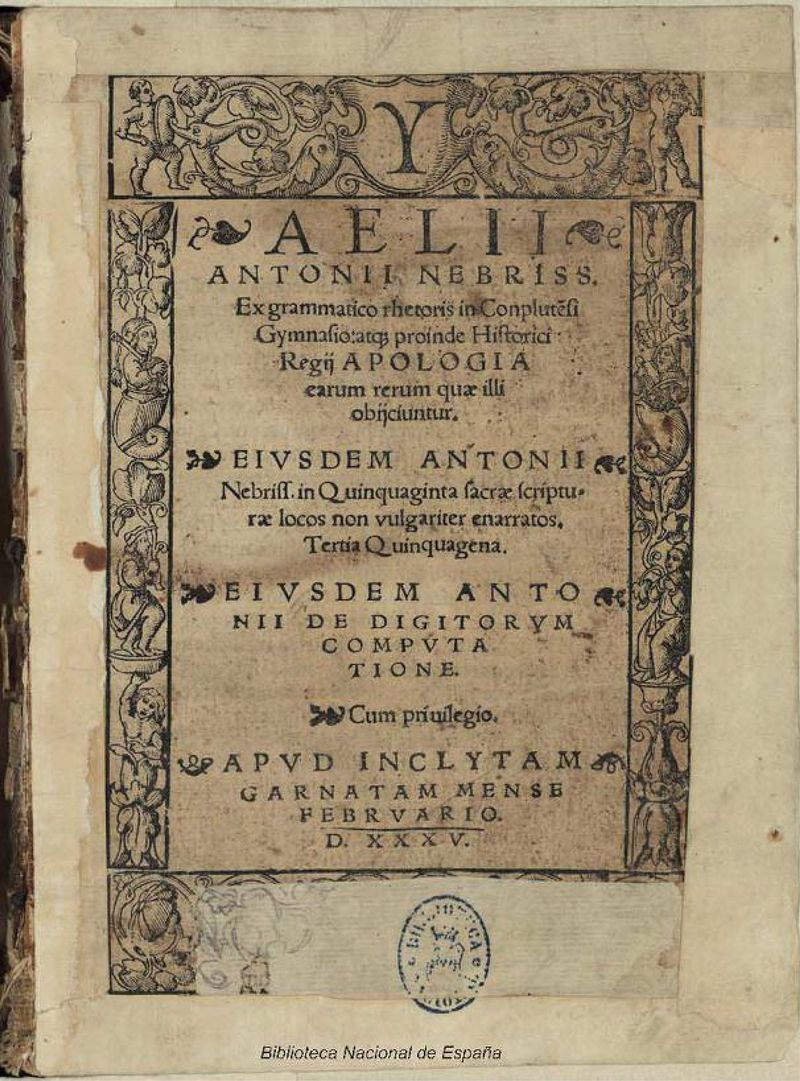
Apología de Nebrija, en edición de 1535, acompañando algunas anotaciones sobre las Sagradas Escrituras. Conservado en la Biblioteca Nacional de España.
La Biblia Políglota Complutense, que no nació con el objetivo de la traducción de estos textos, sí incluye anotaciones y versiones interlineales de algunas secciones, como la de los Setenta efectuada por el helenista converso Juan de Vergara. En esta empresa Antonio de Nebrija quiso realizar una versión latina moderna, pero el cardenal Cisneros no estuvo dispuesto a modificar el texto latino tradicional. En realidad, Nebrija ya había comenzado su trabajo de corrección muchos años antes, y a principios del siglo XVI había sido condenado por tal actividad por la Inquisición.
Ello dio lugar a que publicara en 1507 su Apología, un bello alegato por la libertad de pensamiento y expresión. Los comentarios y anotaciones realizados por numerosos eruditos sobre múltiples ediciones de la Biblia incluían también frecuentes aclaraciones sobre la traducción del texto.
Años más tarde, Fray Luis de León fue condenado por la Inquisición y pasó cinco años en la cárcel, entre otros motivos por su interpretación de la Biblia, que valoraba más el texto hebreo que la versión latina aceptada (Vulgata). Fray Luis realizó en castellano su exposición sobre el Cantar de los Cantares, obra que también Benito Arias Montano traduciría en verso desde el hebreo.

La Biblia Políglota Complutense fue la primera edición impresa en varias lenguas de una Biblia completa. Constituye uno de los testimonios más relevantes del humanismo cristiano del Renacimiento y el mayor hito tipográfico de la imprenta española de la época. Fue encargada por el cardenal Cisneros a la Universidad de Alcalá a principios del siglo XVI y la impresión de sus seis volúmenes se realizó en 1517. Incluye textos en hebreo, en el latín de la Vulgata, en griego con traducción latina interlineal y en arameo.
También la Biblia Regia o Políglota de Amberes, publicada entre 1568 y 1572 en la imprenta de Cristóbal Plantino, y cuidada por Benito Arias Montano, es testimonio de la combinación de lenguas y traducciones, e incluye las versiones latinas de la Vulgata y de Pagnini, con correcciones del humanista extremeño. Quiso impedir que saliera a la luz esta Biblia León de Castro, el profesor de griego y latín en la Universidad de Salamanca que también participó en las acusaciones contra Fray Luis de León.
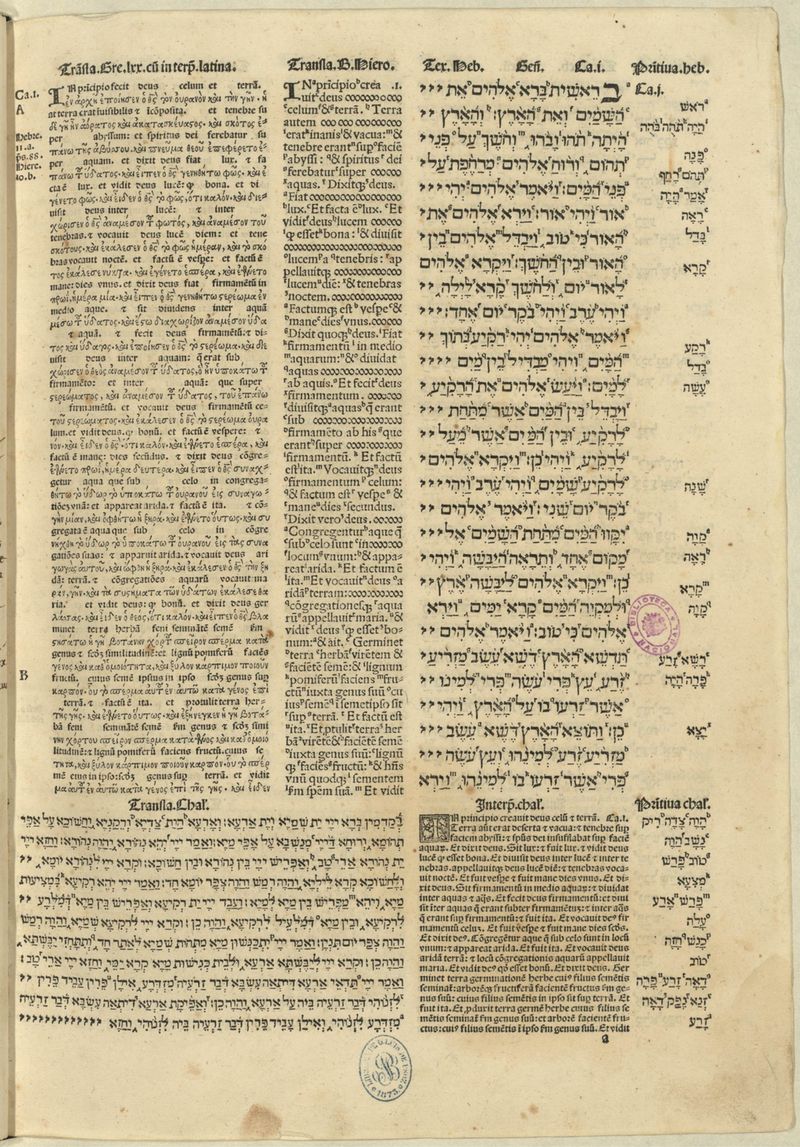
Vol. I, página del Génesis. Biblia Políglota Complutense. Arnaldo Guillén de Brócar, 1514, [dominio público] vía Wikimedia Commons.
Las traducciones a lenguas europeas
Las lenguas de Europa participaron también de este importante movimiento traductor y se vieron notablemente enriquecidas por ello. Por ejemplo, en el siglo XVI hubo varias versiones francesas de la Biblia, como las publicadas en Lovaina, las de Pierre-Robert Olivétan y Lefêvre d’Étaples, o la protestante de Calvino. Heredera de alguna de ellas sería la Biblia de Port Royal, ya en la centuria siguiente. Y se realizaron también varias versiones, parciales o totales, al neerlandés, con precedentes medievales. La traducción de Lutero al alemán supuso el punto de partida de la unificación de esta lengua.
En el caso de España, ya en el siglo XV la llamada Biblia de Alba ofreció una versión al romance castellano del Antiguo Testamento, desde el hebreo y el latín, realizada por el rabino Moisés Arragel de Guadalajara; y se conocen otras anteriores, como la llamada Biblia Alfonsina, encargada por el Rey Sabio, de la que solo han quedado fragmentos.
Otra importante traducción al castellano fue la Biblia del Oso (Basilea, 1569), llamada así por la imagen que presenta la portada. Fue realizada, fuera de España, por el protestante Casiodoro de Reina, perseguido por la Inquisición, huido a Ginebra y rechazado también por los calvinistas.
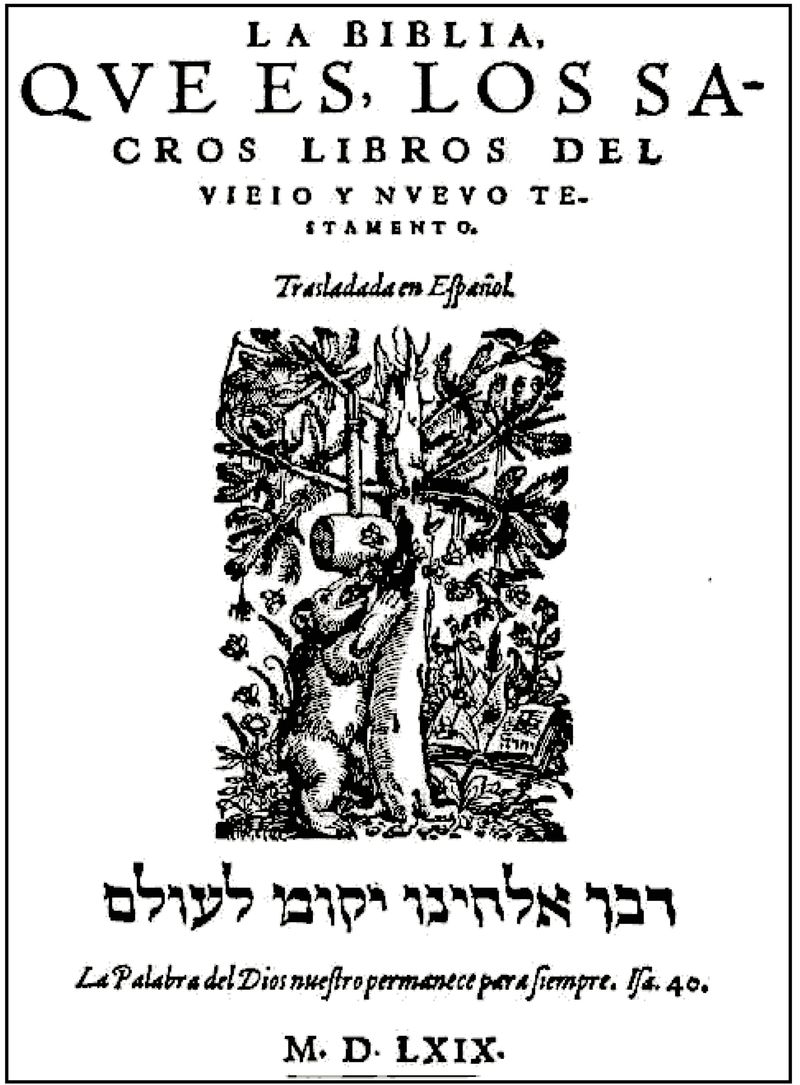
Primera página de la Biblia del Oso, Basilea, 1569, [dominio público] vía Wikimedia Commons.
15th to 16th centuries Translation and freedom of thought: versions of the Bible
8
The spread of humanism in Europe brought with it an interest in translating the Bible with a view to modernising and improving the text in line with new criteria. That activity faced difficulties resulting from the Inquisition’s censorship as the 16th century progressed, particularly in Spain. Erasmus of Rotterdam translated the New Testament into Latin (1516) in order to update the text of the Vulgate, the Latin translation by Jerome of Stridon (4th-5th centuries), and in 1528 the Italian Sante Pagnini published another Latin version from the Hebrew.
Apologia by Nebrija, 1535 edition, together with annotations on the Holy Scriptures. Kept in the Spanish National Library.
The Biblia Políglota Complutense (Complutensian Polyglot Bible), which was not created for the purpose of translating these texts, did however include annotations and interlineal translations of certain sections, such as that of the Seventy by the Hellenist converso (Christian convert from Judaism) Juan de Vergara. In the context of this enterprise, Antonio de Nebrija wanted to produce a modern Latin version, but Cardinal Cisneros was not willing to alter the traditional Latin text. In fact, Nebrija had begun his correction work many years before, and at the beginning of the 16th century he had been condemned for that activity by the Inquisition.
That led him to publish his Apologia in 1507, a great plea in favour of freedom of thought and expression. The comments and annotations made by numerous scholars on multiple editions of the Bible also included frequent clarifications regarding the translation of the text.
Years later, Friar Luis de León was condemned by the Inquisition and spent five years in prison, due, among other reasons, to his interpretation of the Bible, which gave more weight to the Hebrew text than to the accepted Latin version (the Vulgata). Friar Luis produced his translation of the Cantar de los Cantares (Song of Songs) in Castilian, a work which Benito Arias Montano would also translate in verse from Hebrew.
The Biblia Políglota Complutense was the first edition of a complete Bible printed in various languages. It is one of the most important testimonies to Christian humanism in the Renaissance and the greatest typographical milestone in Spanish printing of the era. It was commissioned from the University of Alcalá by Cardinal Cisneros at the beginning of the 16th century and its six volumes were printed in 1517. It includes texts in Hebrew, in Latin of the Vulgata, in Greek with interlineal Latin translation, and in Aramaic.
The King’s Bible, or Antwerp Polyglot, published between 1568 and 1572 at the printworks of Christophe Plantin and supervised by Benito Arias Montano, is also testimony to the combination of languages and translations, and includes Latin versions of the Vulgata and of Pagnini. León de Castro, professor of Greek and Latin at the University of Salamanca, also a participant in the accusations against Friar Luis de León, wanted to prevent that Bible from seeing the light.
Vol. I, page of Genesis. Biblia Políglota Complutense. Arnaldo Guillén de Brócar, 1514, [public domain, via Wikimedia Commons].
Translations into European languages
The languages of Europe were also part of this important movement in translation, and they were much enriched by it. For example, there were many French versions of the Bible in the 16th century, such as those published in Louvain, those of Pierre-Robert Olivétan and Lefêvre d’Étaples, and Calvin’s protestant version. An heir to some of them would be the Port-Royal Bible during the subsequent century. Various partial or complete versions were also produced in Dutch, with medieval precedents. Luther’s translation into German was the starting point for the unification of that language.
In the case of Spain, as early as the 15th century, the Alba Bible was an Old Castilian version of the Old Testament, translated from Hebrew and Latin by the Rabbi Moisés Arragel of Guadalajara, and there were other previous versions, such as the Biblia Alfonsina, commissioned by the Wise King, of which only fragments survive.
Another important translation into Castilian was the Biblia del Oso (the Bear Bible) (Basel, 1569), thus named due to the image on its cover. It was produced outside of Spain by the protestant Casiodoro de Reina, who was pursued by the Inquisition, fled to Geneva and was also rejected by the Calvinists.
First page of the Biblia del Oso, Basel, 1569, [public domain, via Wikimedia Commons].


